

Full article in french here
Growing Medtech needs, without massive disruption from AI
Unlike certain segments of the healthtech industry, such as screening radiology or medical documentation, implantable medical devices rely on physical interaction between caregivers and patients. Needles, stents, catheters: a human medical procedure implants a physical technology into a patient’s body. The very nature of the Medtech industry therefore protects it from massive AI disruption. You cannot treat aortic stenosis with software. You cannot perform a thrombectomy with an algorithm.
Added to this is widespread caution among public authorities across all geographies, who seek to protect patient safety amid the rapid development of new technologies, including AI. For example, the US FDA requires full decision-making transparency for any use of AI in healthcare, with the goal of avoiding any “black box” effect that would prevent absolute traceability for patients. These constraints structurally raise the barrier to entry for new players and are among the factors analyzed by Lauxera’s teams during due diligence.
A rapidly expanding M&A market for Medtech
The Medtech industry has another defining characteristic for private equity investors: a universe of acquirers that has both broadened and intensified in recent years. Major industrial players are engaged in a deep overhaul of their portfolios – as seen with Medtronic, which recently announced the spin-off of its diabetes division; Baxter, which sold its renal care division to Carlyle for $3.8 billion; and Stryker, which divested its US spine assets.
This wave of divestitures creates two opportunities for private equity: acquiring mature assets at reasonable valuations, and benefiting from sustained industrial demand ahead of future exits.
By shedding these business lines, Medtech industry giants generate liquidity that they can then use to acquire companies that have already demonstrated product-market fit and can be added to their existing sales forces’ bags. In these cases, valuations tend to be based on target companies’ revenue and gross margin rather than on EBITDA multiples.
Against this backdrop, the appetite for transformative acquisitions has never been stronger. Johnson & Johnson acquired Shockwave Medical; Stryker bought Inari Medical for around $4.9 billion, and Abbott acquired Exact Sciences for $21 billion. The total value of Medtech transactions reached $97.6 billion in 2025, the highest level in more than a decade. The emergence of new Asian strategic acquirers (Japanese, Korean, or Indian) seeking cutting-edge technologies outside their domestic markets is further accelerating this trend. This trend structurally broadens the pool of buyers and supports valuations at exit.
“The conditions are in place for Medtech-focused private equity to continue generating
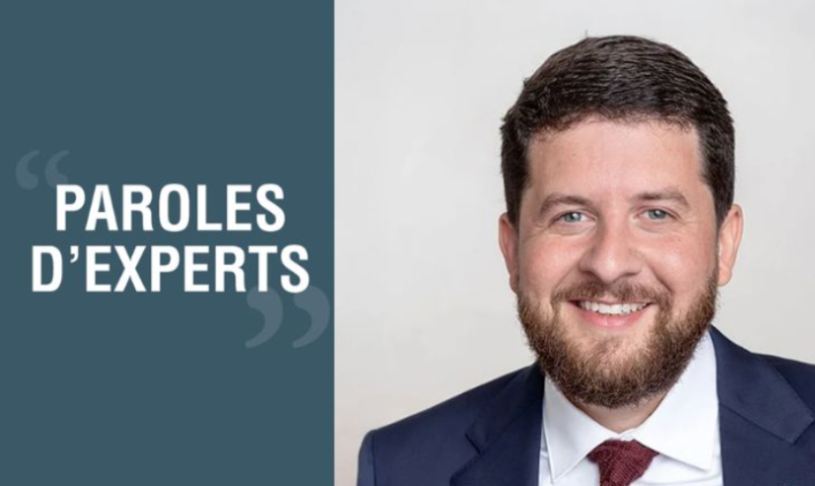
differentiated returns. This is not a cyclical promise – it is a structural thesis.” – Samuel Levy
Medtech as an investment strategy for Lauxera
Terumo’s acquisition of OrganOx in October 2025 perfectly illustrates this phenomenon. A spin-off from the University of Oxford, OrganOx solved one of the most critical problems in liver transplantation: preserving the harvested organ. The traditional ice-based technique keeps the liver viable for only a few hours, forcing surgical teams to operate under emergency conditions, in degraded circumstances, without certainty about the graft’s functionality. The metra® device reverses this logic: by continuously perfusing the organ with oxygenated human blood at body temperature, it extends preservation time to several days, allows the graft to be tested before implantation, and makes usable organs once considered too fragile. The rejection rate drops by 50% – a decisive improvement at a time when 14,000 patients are waiting for a liver in the United States.
Lauxera first invested in OrganOx in July 2023, with a clear strategy: focus deployment on the United States, where consumable reimbursement reaches $40,000 per use, compared with €5,000 in France. Samuel Levy’s team supported the strengthening of execution, notably the recruitment of a CFO from a publicly listed Medtech company, tasked with simultaneously preparing an IPO and a strategic sale. In twenty-six months, revenue grew from $16 million to over $100 million. In February 2025, a secondary offering allowed Terumo Corporation and Intuitive Surgical to enter as minority shareholders. A few months later, in October 2025, Terumo completed the full acquisition of the company for $1.5 billion – 20.4 times revenue, a record multiple in Medtech in recent memory for a scaled commercial asset. Lauxera’s IRR reached triple digits.
OrganOx is not the only example of Medtech investments made by Lauxera: the sector is an integral part of the Healthtech strategy of the French American investment fund. Acandis, the German pioneer in neurovascular treatment, is another illustration. Founded in 2006, with more than 300 employees and a presence in over 60 countries, the company has a rare industrial profile: profitable, sustained organic growth, and vertically integrated. The 17 product families manufactured and marketed by the company aim to combat strokes and aneurysm ruptures. Acandis’s core innovation lies in specialized engineering using nitinol, a metal often used in implantable medical devices. This is the first investment of the Lauxera Growth II fund: Lauxera invested €50 million in January 2025, with a dual objective: commercial acceleration in markets where the company is already present and obtaining FDA approval to begin commercialization in the United States.
In a sector where demographic tailwinds are favorable, where artificial intelligence cannot replace the physical device, and where the universe of acquirers is expanding globally, the conditions are in place for Medtech-focused private equity to continue generating differentiated returns. This is not a cyclical promise – it is a structural thesis.
